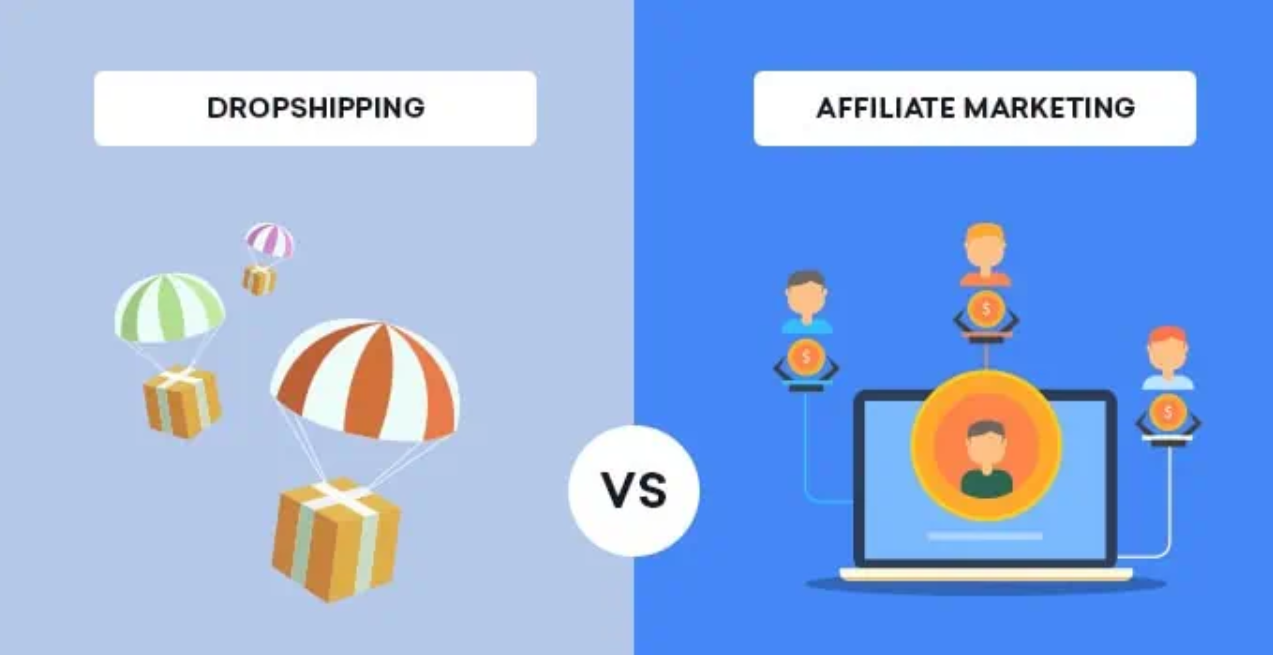
In the rapidly evolving world of online business, two models continue to dominate conversations among beginners and experienced entrepreneurs alike: affiliate marketing and dropshipping. Both offer low barriers to entry, flexible working environments, and the potential for significant income. However, the critical question remains: which one is more profitable?
This comprehensive guide will break down both business models in detail, compare their advantages and disadvantages, and help you determine which option aligns best with your financial goals and skill set.
What Is Affiliate Marketing?
Affiliate marketing is a performance-based business model where you promote products or services offered by other companies. When someone makes a purchase through your unique affiliate link, you earn a commission.
How It Works:
- You join an affiliate program.
- You receive a unique tracking link.
- You promote the product through content, ads, or social media.
- You earn a commission when a sale is made.
Key Features:
- No need to create your own product
- No inventory management
- No customer service responsibilities
- Passive income potential
What Is Dropshipping?
Dropshipping is an e-commerce business model where you sell physical products without holding inventory. When a customer places an order, you purchase the product from a supplier who ships it directly to the customer.
How It Works:
- You create an online store.
- You list products from suppliers.
- A customer places an order.
- The supplier fulfills and ships the product.
Key Features:
- You control pricing and branding
- No need to stock inventory
- Requires store management
- Customer service is your responsibility
Startup Costs Comparison
Affiliate Marketing Costs:
Affiliate marketing is one of the cheapest online businesses to start.
Typical expenses include:
- Domain and hosting
- Website setup
- Content creation tools
- Optional advertising
Estimated startup cost: $50–$500
Dropshipping Costs:
Dropshipping requires a slightly higher investment.
Typical expenses include:
- E-commerce platform subscription
- Domain and hosting
- Paid ads (often necessary)
- Product research tools
Estimated startup cost: $200–$2000
Verdict: Affiliate marketing is more budget-friendly for beginners.
Profit Margins
Affiliate Marketing:
- Commission rates range from 5% to 70%
- Digital products often offer higher commissions
- No additional costs per sale
Example:
If you promote a $100 product with a 30% commission, you earn $30 per sale.
Dropshipping:
- Profit margins typically range from 10% to 40%
- Costs include product price, shipping, and advertising
- Profit depends heavily on ad performance
Example:
Sell a product for $50, buy it for $20 → Profit = $30 (before ad costs)
Verdict: Affiliate marketing often has higher net profit margins, especially for digital products.
Risk Level
Affiliate Marketing:
- Very low risk
- No upfront inventory investment
- No refunds or chargebacks to manage
Dropshipping:
- Moderate risk
- Ad campaigns can lose money
- Product quality issues can lead to refunds
Verdict: Affiliate marketing is significantly less risky.
Scalability
Affiliate Marketing:
- Easily scalable with SEO and content marketing
- Automation through funnels and email marketing
- Can promote multiple products simultaneously
Dropshipping:
- Scalable through paid ads and product expansion
- Requires constant optimization
- Logistics and customer service can become complex
Verdict: Both are scalable, but affiliate marketing is easier to automate.
Time to Profit
Affiliate Marketing:
- Takes longer to see results (especially with SEO)
- Requires consistent content creation
Timeline: 3–6 months (or longer)
Dropshipping:
- Faster results with paid ads
- Can generate sales within days
Timeline: 1–4 weeks
Verdict: Dropshipping wins for faster initial profits.
Passive Income Potential
Affiliate Marketing:
- High passive income potential
- Content continues to generate income over time
- Ideal for long-term growth
Dropshipping:
- Not truly passive
- Requires ongoing management (ads, support, fulfillment)
Verdict: Affiliate marketing is better for passive income.
Control Over Business
Affiliate Marketing:
- Limited control over:
- Product pricing
- Commission rates
- Sales pages
Dropshipping:
- Full control over:
- Pricing
- Branding
- Customer experience
Verdict: Dropshipping offers more control.
Customer Relationships
Affiliate Marketing:
- No direct relationship with customers
- Harder to build brand loyalty
Dropshipping:
- Direct customer interaction
- Opportunity to build a brand
Verdict: Dropshipping is better for long-term brand building.
Marketing Strategies
Affiliate Marketing:
- SEO (Search Engine Optimization)
- Blogging
- YouTube marketing
- Email marketing
- Social media content
Dropshipping:
- Facebook Ads
- TikTok Ads
- Influencer marketing
- Google Ads
Verdict: Affiliate marketing relies more on organic traffic, while dropshipping depends heavily on paid ads.
Skills Required
Affiliate Marketing:
- Content writing
- SEO
- Basic marketing knowledge
- Copywriting
Dropshipping:
- Paid advertising
- Product research
- Customer service
- Website optimization
Verdict: Affiliate marketing is easier for beginners with limited technical skills.
Long-Term Sustainability
Affiliate Marketing:
- Sustainable with consistent content
- Builds long-term assets (blogs, YouTube channels)
Dropshipping:
- Trends change quickly
- Requires constant product research
Verdict: Affiliate marketing is more sustainable long-term.
Pros and Cons Summary
Affiliate Marketing Pros:
- Low startup cost
- Passive income potential
- Minimal risk
- No inventory or shipping
Affiliate Marketing Cons:
- Slower results
- Limited control
- Requires patience
Dropshipping Pros:
- Fast results
- Full control over pricing
- Brand-building potential
Dropshipping Cons:
- Higher risk
- Requires ads budget
- Customer service challenges
Which Is More Profitable?
The answer depends on your goals, budget, and skills.
Choose Affiliate Marketing If:
- You want long-term passive income
- You prefer low-risk investments
- You enjoy content creation
- You have patience to build traffic
Choose Dropshipping If:
- You want quick profits
- You are comfortable running ads
- You want to build a brand
- You can handle customer service
Real-World Profit Scenarios
Affiliate Marketing Scenario:
- Blog traffic: 10,000 visitors/month
- Conversion rate: 2%
- Commission per sale: $20
Monthly Profit:
10,000 × 2% × $20 = $4,000
Dropshipping Scenario:
- Daily sales: 20 orders
- Profit per order: $10
Monthly Profit:
20 × $10 × 30 = $6,000
Minus ads: $3,000
Net Profit: $3,000
Final Verdict
If you’re looking for low-risk, long-term, and passive income, affiliate marketing is generally more profitable over time.
However, if you want fast cash flow and are willing to invest in ads, dropshipping can generate higher short-term profits.
Pro Tip: Combine Both Models
The smartest entrepreneurs don’t choose one—they combine both.
For example:
- Use affiliate marketing content to drive traffic
- Promote your own dropshipping products
- Build an email list and monetize both ways
This hybrid approach maximizes revenue streams and reduces risk.
Conclusion
Affiliate marketing and dropshipping are both powerful online business models, but they serve different purposes. Affiliate marketing is ideal for building a sustainable, passive income stream, while dropshipping is better suited for quick profits and brand control.
Ultimately, the most profitable path is the one that aligns with your strengths and long-term vision. Whether you choose affiliate marketing, dropshipping, or a combination of both, success depends on consistency, strategy, and continuous learning.
Start small, test aggressively, and scale what works.