In today’s highly competitive business environment, organizations need more than a simple customer database. Modern companies require advanced tools that help them understand customer behavior, predict sales outcomes, improve team performance, and make strategic decisions based on real-time data. This is where enterprise CRM software with analytics dashboard becomes essential.
Enterprise Customer Relationship Management (CRM) platforms have evolved far beyond contact management. They now combine customer intelligence, automation, reporting, forecasting, and business analytics into a centralized ecosystem. Organizations that leverage enterprise CRM analytics gain a significant advantage by transforming raw customer data into actionable insights.
Whether you manage a multinational corporation, a growing SaaS company, a financial institution, or a large sales organization, implementing enterprise CRM software with powerful analytics dashboards can dramatically improve productivity, customer retention, and revenue growth.
This comprehensive guide explains everything you need to know about enterprise CRM software, its benefits, features, pricing, implementation strategies, and how analytics dashboards help organizations make smarter business decisions.
What Is Enterprise CRM Software?
Enterprise CRM software is a comprehensive customer relationship management platform designed specifically for medium and large organizations that handle extensive customer data, multiple departments, and complex sales processes.
Unlike basic CRM systems, enterprise solutions offer:
- Advanced analytics
- Sales forecasting
- Workflow automation
- Multi-department collaboration
- AI-powered insights
- Enterprise-grade security
- Large-scale integrations
- Custom reporting capabilities
These systems serve as the central hub for customer information across marketing, sales, customer support, finance, and executive management teams.
Why Businesses Need Analytics Dashboards
Many companies collect massive amounts of customer data but struggle to extract meaningful insights from it.
Without analytics dashboards, organizations often face:
- Inaccurate sales forecasting
- Poor visibility into customer behavior
- Delayed decision-making
- Revenue leakage
- Inefficient sales processes
- Missed growth opportunities
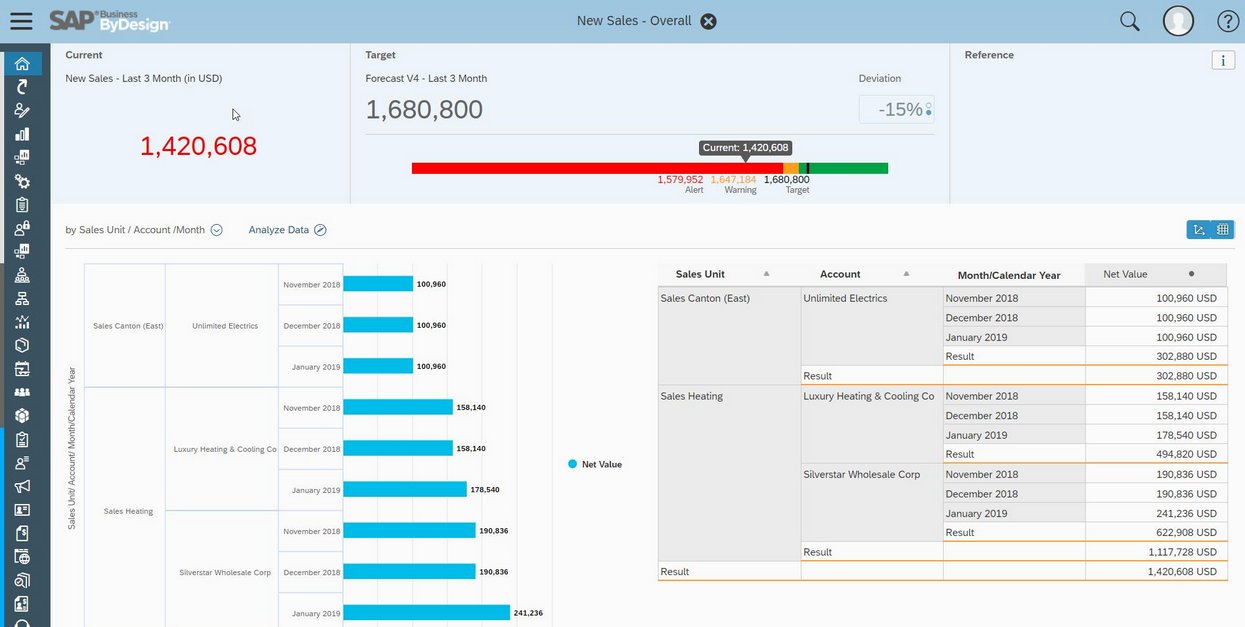
Analytics dashboards solve these challenges by presenting critical business metrics in easy-to-understand visual formats.
Executives can instantly view:
- Sales performance
- Revenue trends
- Customer acquisition rates
- Pipeline health
- Lead conversion metrics
- Customer retention statistics
- Team productivity
Real-time dashboards eliminate guesswork and enable data-driven decisions.
Key Features of Enterprise CRM Software with Analytics Dashboard
1. Real-Time Data Visualization
Modern CRM dashboards display information through:
- Interactive charts
- Heat maps
- KPI scorecards
- Trend graphs
- Geographic reports
Users can quickly identify patterns and business opportunities.
2. Sales Pipeline Analytics
Sales managers gain visibility into:
- Lead progression
- Deal stages
- Win rates
- Average sales cycle length
- Revenue forecasts
This allows teams to focus on opportunities most likely to convert.
3. Customer Behavior Analysis
Advanced CRM platforms analyze:
- Purchase history
- Website activity
- Email engagement
- Support interactions
- Customer lifetime value
Businesses can personalize marketing efforts and improve retention.
4. AI-Powered Insights
Artificial intelligence can:
- Predict customer churn
- Recommend next best actions
- Identify upselling opportunities
- Forecast future sales trends
AI transforms CRM data into strategic business intelligence.
5. Custom Dashboard Creation
Every organization has unique goals.
Enterprise CRM solutions allow users to create dashboards tailored to:
- Sales teams
- Marketing departments
- Customer service representatives
- Executives
- Financial analysts
This customization improves relevance and usability.
Major Benefits of Enterprise CRM Analytics
Improved Decision Making
Leaders gain immediate access to accurate business intelligence.
Instead of relying on assumptions, decisions are based on measurable performance indicators.
Increased Revenue
Analytics help identify:
- High-value prospects
- Upselling opportunities
- Cross-selling opportunities
- Customer retention risks
As a result, businesses maximize revenue potential.
Better Customer Experience
Customer insights allow organizations to:
- Personalize communications
- Resolve issues faster
- Anticipate customer needs
Satisfied customers tend to remain loyal longer.
Enhanced Productivity
Automated reporting eliminates manual spreadsheet work.
Employees spend less time compiling data and more time taking action.
Accurate Forecasting
Enterprise CRM dashboards generate reliable forecasts using historical data and predictive analytics.
This improves budgeting and strategic planning.
How Analytics Dashboards Transform Sales Performance
Sales leaders often struggle with limited visibility into team activities.
Analytics dashboards provide:
Performance Tracking
Managers can monitor:
- Calls completed
- Meetings scheduled
- Opportunities created
- Closed deals
Territory Analysis
Organizations can evaluate:
- Regional performance
- Market penetration
- Revenue by territory
Conversion Metrics
Dashboards reveal:
- Lead-to-opportunity rates
- Opportunity-to-sale rates
- Cost per acquisition
These metrics help optimize sales processes.
Essential Dashboard Metrics Every Enterprise Should Track
Revenue Metrics
- Monthly recurring revenue (MRR)
- Annual recurring revenue (ARR)
- Total revenue growth
- Average deal size
Sales Metrics
- Lead conversion rate
- Opportunity value
- Sales cycle duration
- Win/loss ratio
Customer Metrics
- Customer lifetime value
- Retention rate
- Churn rate
- Net promoter score (NPS)
Marketing Metrics
- Campaign ROI
- Cost per lead
- Lead quality score
- Customer acquisition cost
Tracking these KPIs enables continuous improvement.
Enterprise CRM Software vs Traditional CRM
| Feature | Traditional CRM | Enterprise CRM |
|---|---|---|
| Contact Management | Basic | Advanced |
| Analytics | Limited | Extensive |
| AI Features | Rare | Common |
| Forecasting | Basic | Advanced |
| Automation | Minimal | Comprehensive |
| Scalability | Limited | Enterprise-Level |
| Integrations | Few | Hundreds |
| Security | Standard | Enterprise Grade |
Enterprise CRM platforms are designed to support long-term organizational growth.
Industries That Benefit Most
Financial Services
Banks and financial institutions use CRM analytics to:
- Monitor client relationships
- Identify investment opportunities
- Improve compliance reporting
Healthcare
Healthcare organizations utilize CRM systems to:
- Improve patient engagement
- Manage communications
- Track service outcomes
Manufacturing
Manufacturers gain visibility into:
- Distributor performance
- Sales forecasting
- Customer demand patterns
SaaS Companies
Software providers rely heavily on CRM analytics for:
- Subscription growth
- Churn prediction
- Customer success management
Implementation Best Practices
Successful CRM implementation requires careful planning.
Define Objectives
Identify clear goals before deployment.
Examples include:
- Increasing sales conversions
- Improving customer retention
- Reducing reporting time
Clean Existing Data
Poor data quality leads to poor analytics.
Before migration:
- Remove duplicates
- Correct errors
- Standardize records
Train Employees
User adoption determines CRM success.
Provide:
- Hands-on workshops
- Video tutorials
- Ongoing support
Monitor Performance
Track CRM effectiveness through:
- Usage rates
- Productivity improvements
- Revenue growth
Pricing Overview
Enterprise CRM software pricing varies depending on features and scale.
Small Enterprise
- $50–$100 per user/month
Mid-Sized Enterprise
- $100–$250 per user/month
Large Enterprise
- $250–$500+ per user/month
Additional costs may include:
- Custom integrations
- Data migration
- Training services
- Premium support
Although implementation costs can be significant, ROI often outweighs expenses.
How to Choose the Right Enterprise CRM Software
When evaluating solutions, consider:
Scalability
Can the system support future growth?
Analytics Capabilities
Does it provide advanced reporting and dashboards?
Integration Support
Can it connect with existing tools?
Security Features
Look for:
- Role-based permissions
- Data encryption
- Compliance certifications
User Experience
A user-friendly interface encourages adoption.
Future Trends in Enterprise CRM Analytics
The future of CRM technology is increasingly intelligent.
Emerging trends include:
Predictive Analytics
AI models forecast customer behavior before it occurs.
Generative AI
CRM platforms generate:
- Personalized emails
- Sales recommendations
- Customer summaries
Embedded Business Intelligence
Analytics become integrated into every workflow.
Hyper-Personalization
Organizations deliver individualized customer experiences at scale.
Frequently Asked Questions
What is enterprise CRM software with analytics dashboard?
It is an advanced customer relationship management platform that combines customer data management with real-time analytics and reporting capabilities.
Why is analytics important in CRM?
Analytics transforms customer data into actionable insights, enabling better decisions and improved business performance.
Can CRM analytics improve sales?
Yes. Sales teams gain visibility into pipeline performance, customer behavior, and conversion trends, leading to higher revenue.
Is enterprise CRM suitable for medium-sized businesses?
Absolutely. Many growing businesses implement enterprise CRM solutions to prepare for future expansion.
How long does implementation take?
Implementation timelines vary from several weeks to several months depending on complexity.
Conclusion
Organizations that rely solely on intuition risk falling behind competitors that embrace data-driven decision-making. Investing in enterprise CRM software with analytics dashboard provides a centralized platform for customer management, sales optimization, operational efficiency, and strategic growth.
From real-time reporting and predictive analytics to AI-powered forecasting and customer intelligence, enterprise CRM platforms deliver measurable value across every department.
As businesses continue generating larger volumes of customer data, the ability to transform that information into actionable insights will become a defining competitive advantage. Companies that adopt modern CRM analytics today position themselves for stronger customer relationships, higher revenue, and long-term success.
If your organization is seeking a scalable solution that combines customer relationship management with advanced business intelligence, enterprise CRM software with analytics dashboard may be one of the most impactful technology investments you can make.